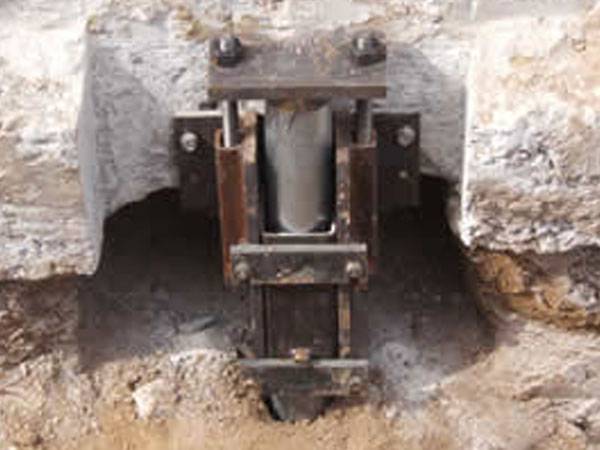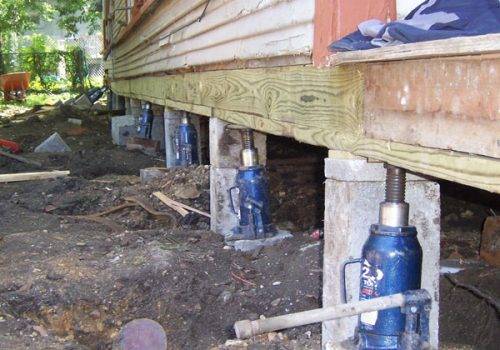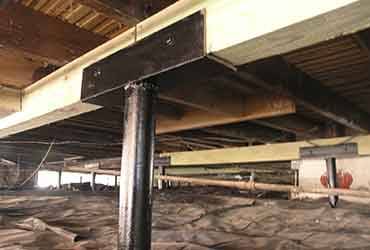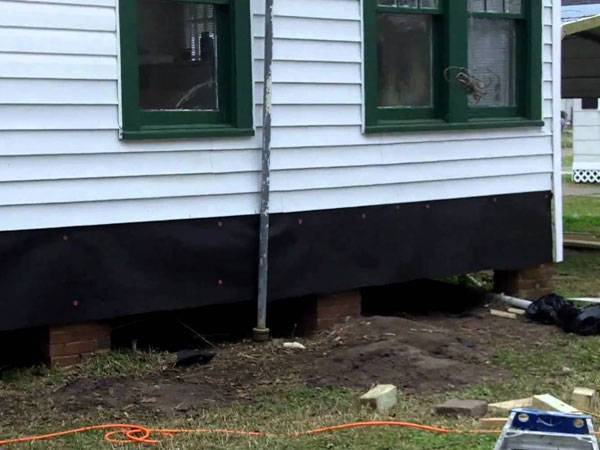
House leveling brings a home back toward its original level position when part of the foundation has settled or sunk. The affected area is lifted and supported so the structure carries weight more evenly.
Changes in level homeowners notice
Any of these can have more than one cause, so we look at the whole picture instead of guessing from one symptom.
- Floors that slope or feel uneven underfoot
- Doors and windows that stick or no longer close properly
- Gaps between walls, ceilings and floors
- Steps, porches or chimneys that appear to be pulling away from the home
How we evaluate your home
We visit the property, look at the foundation, floors and walls, and photograph problem areas. We are looking at where the home has shifted and what the foundation looks like beneath that area. Then we explain what we found and, if leveling makes sense, put the estimate in writing.
How the approach depends on your foundation
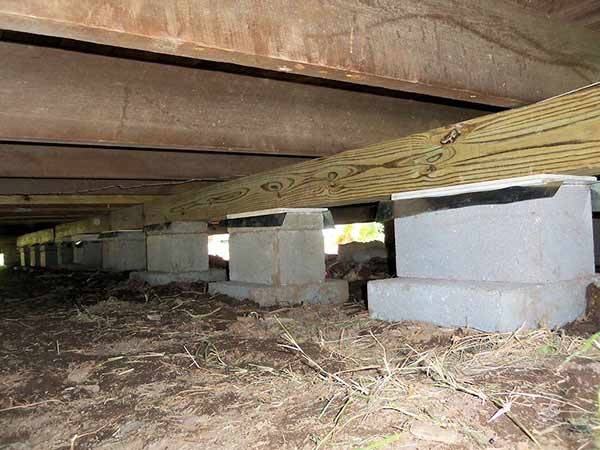
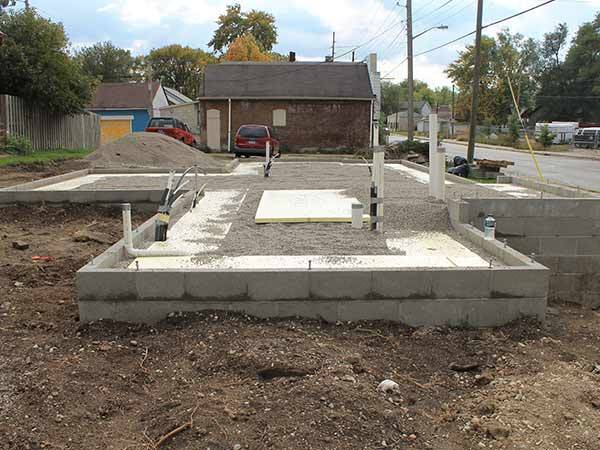
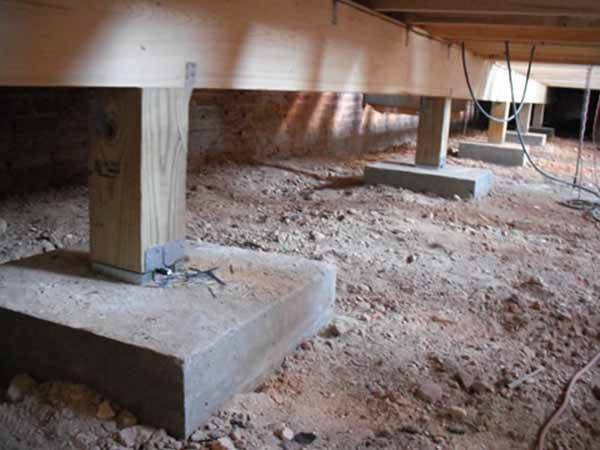
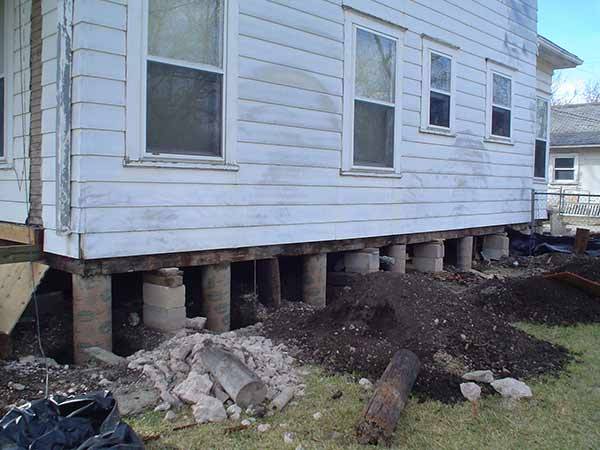
The method follows from how your home is built. On a pier and beam home, leveling generally means working in the crawl space, where piers, shims and beams can be adjusted or replaced as needed. A home on a concrete slab has no crawl space, so the first step is understanding what is happening under the concrete. We describe the approach that fits your home before any work is scheduled.